
Partner With Us - Current Themes
Revolutionary advance in voice input less affected by noise that isolates the wearer's voice
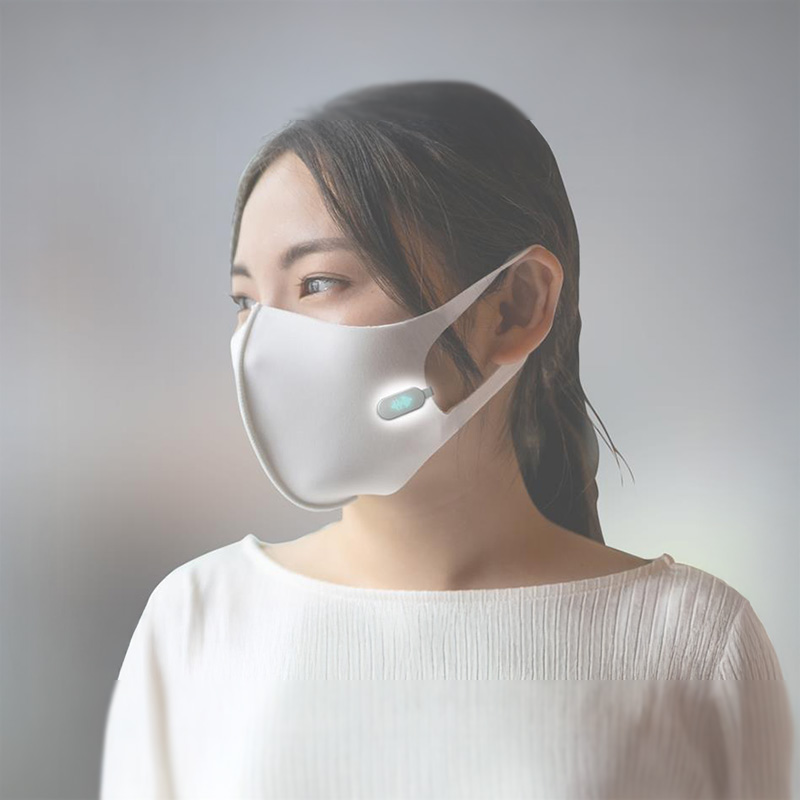
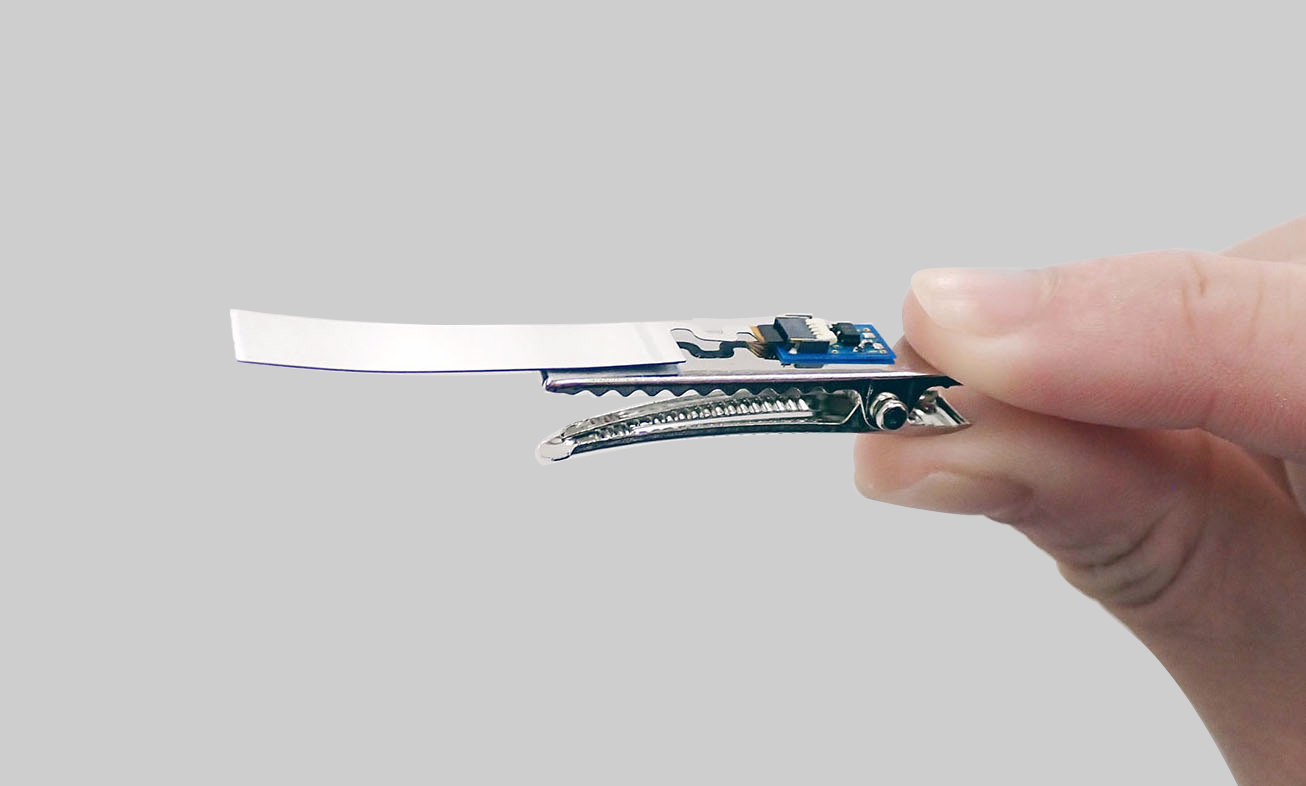
Voice input device clipped to a mask - mask voice clip

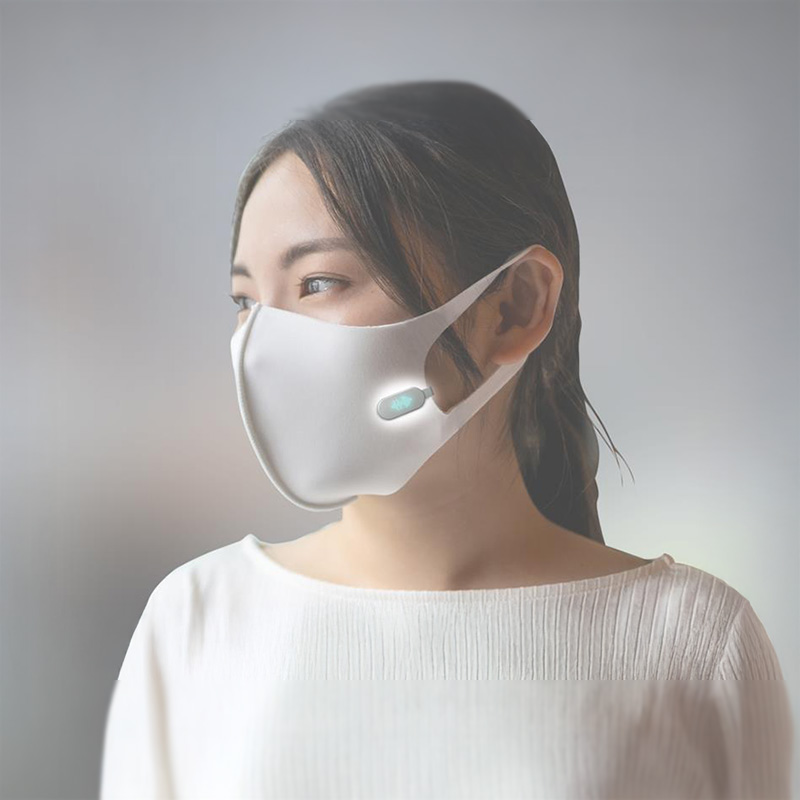

- Mask voice clip, a voice input device clipped to masks
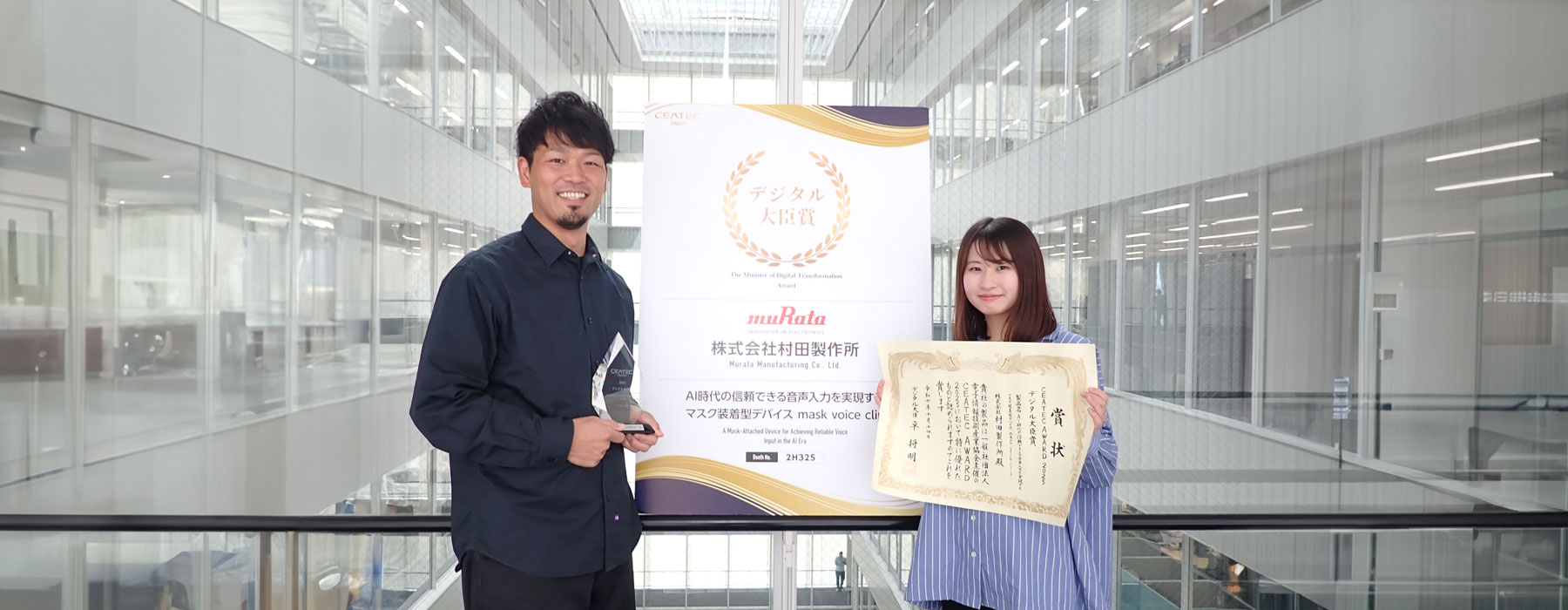
- Winner, Minister of Digital Agency Award, 2025 CEATEC Award Program
Recommended for:
- Those considering voice input deployment where masks are worn (in medical settings, manufacturing, or construction)
- Those with ideas for a voice input device clipped to masks
Background of Development
Voice input is becoming the most intuitive way to interact with the digital world, as generative AI use continues to surge. Yet in the physical world, adoption of voice input has not spread to medical, manufacturing, or construction sites that are often noisy and require people to wear masks.
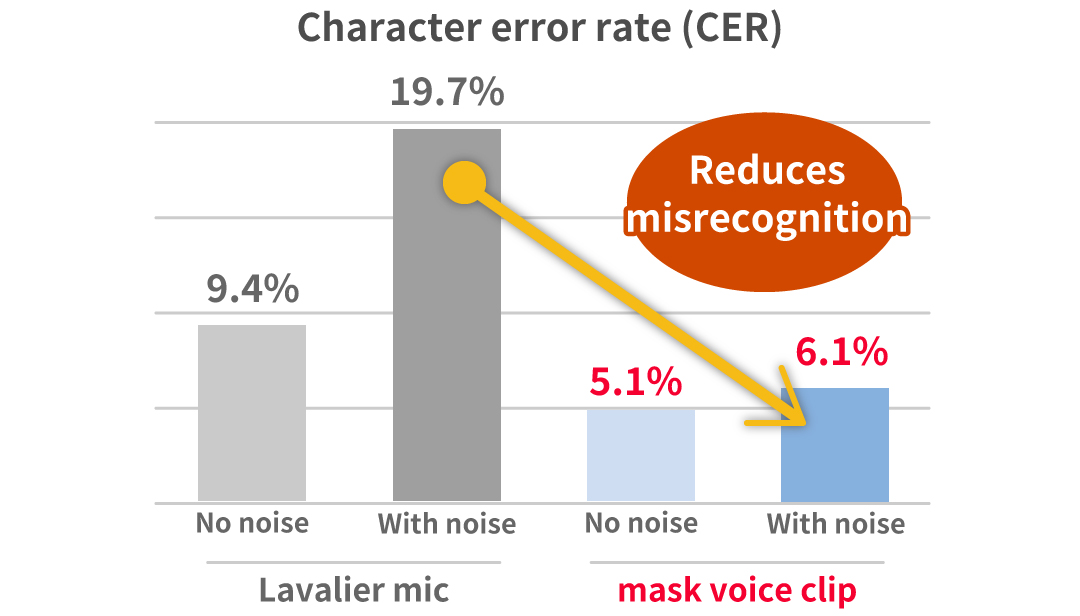
One factor for this may be that some things present challenges for conventional voice input technology. Ambient noise or other people's voices may cause misrecognition, and speech through masks may be difficult to pick up.
mask voice clip was developed as a solution. This voice input device clipped to masks provides highly accurate voice isolation even where there is background noise or audible disturbances.
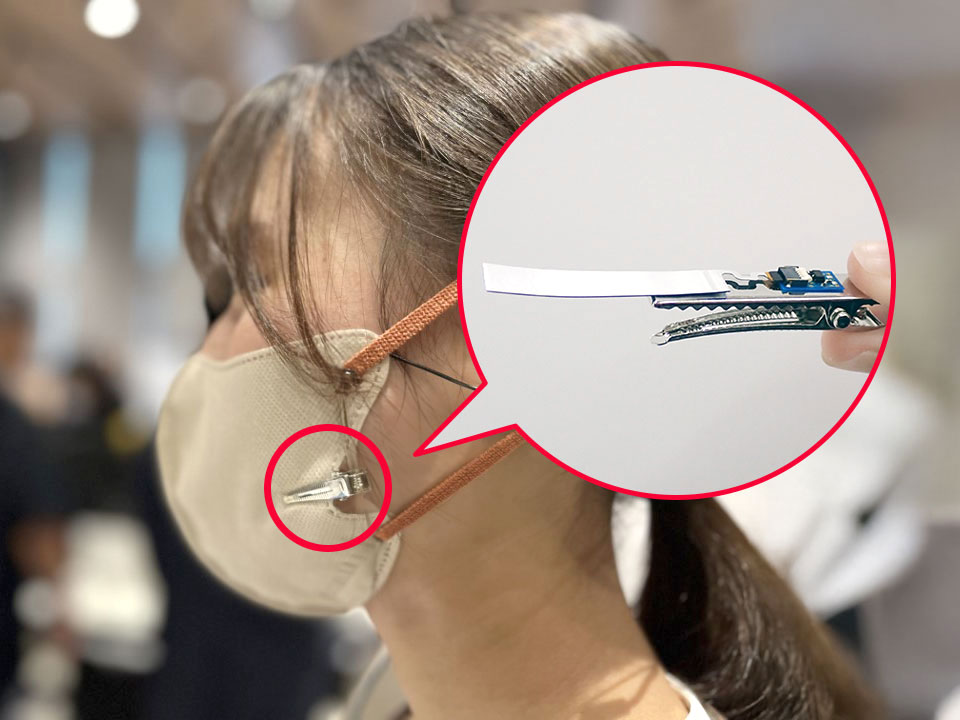
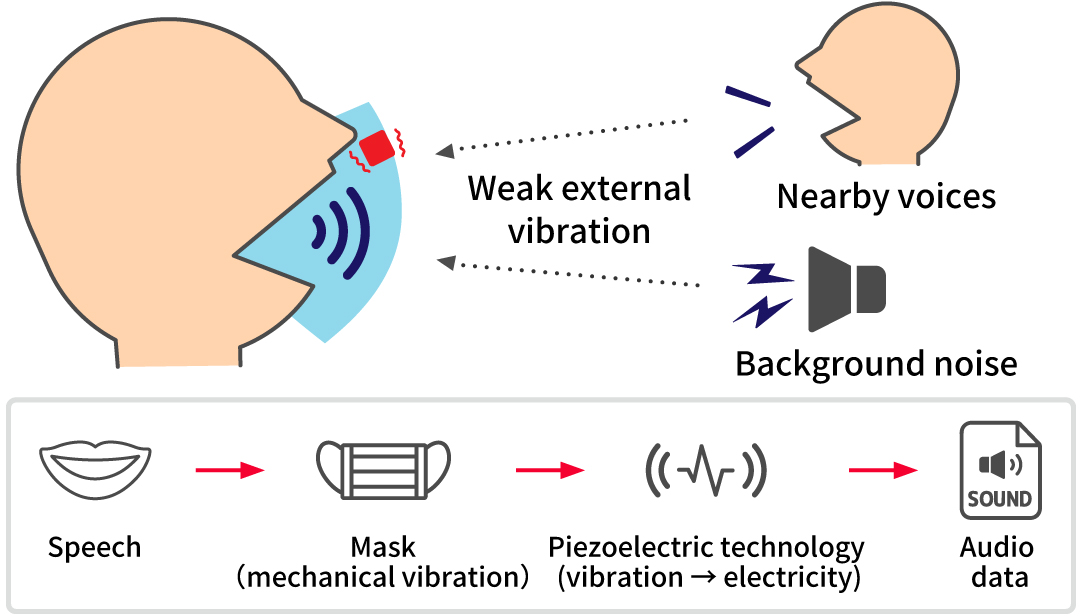
It picks up minute vibrations on the surface of the mask worn by a speaker, enabling accurate input of their voice in real time undisturbed by ambient noise or other speakers’ voices.
This next-gen technology was recognized with a Minister of Digital Agency Award at CEATEC 2025 and has drawn attention from many fields.
Features of mask voice clip
Physically isolates and reliably picks up the speaker's voice, even in noisy environments
Mask voice clip incorporates a Murata Picoleaf TM piezoelectric film sensor that detects minute vibrations on the mask.
Most headset microphones detect vibrations in air, which makes them susceptible to picking up ambient sounds.
In contact microphones such as throat microphones, high-frequency components tend to be attenuated as they pass through the body, which may affect identification of consonants. They may also be uncomfortable and prone to generating noise from rubbing against the neck. In contrast, mask voice clip works by measuring minute mask vibrations as the user speaks. External sound is physically shut out and does not affect the highly accurate sensing of a speaker’s voice.
This makes it a versatile, promising approach for noisy environments, places with multiple speakers, or situations requiring privacy.
Convenient clip-on device that also supports mask hygiene
With its clip structure, mask voice clip is easy to attach or remove from masks. This eliminates the need for special equipment or complicated fasteners, enabling easy attachment and removal before and after work or when switching users. The device itself can be reused by people using disposable masks, supporting mask hygiene.
Low-latency, energy-efficient voice input without software processing
Mask voice clip hardware design enables low-noise voice input. With no need for post-processing such as AI noise reduction, it does not rely on a GPU or other sources of high-performance computing, which minimizes audio input latency. This makes it an ideal voice interface for manufacturing or medical settings or similar applications requiring immediate operation and reliability.
Usage scenarios for mask voice clip
Giving site-specific instructions or taking voice memos

Because users can record themselves accurately without recordings being affected by ambient noise, mask voice clip enables them to instruct others or record memos without worrying about disturbances around them, especially at noisy construction sites or production lines.
Hands-free communication or voice commands

Mask voice clip is convenient where users need to use both hands for other work. Hands-free operation while using factory or medical equipment is one example of this.
FAQ
The device is currently in the development stage. Therefore, we have not finalized the specifications. However, in principle, any mask whose surface structure can detect subtle vibrations is an eligible candidate.
The device is currently in the prototype and verification stage. We will provide detailed specs once we have finalized them.
The device is currently in the prototype and verification stage. We will provide detailed specs once we have finalized them.
The device is currently in the prototype and verification stage. It is not currently for sale to the general public. Please contact us using the inquiries form if your company is interested in this service.
The device is currently in the prototype and verification stage. We have not yet determined the general release date. We will inform you on our website and elsewhere once we have determined the release date.
Inquiries about the mask voice clip Voice Input Device Clipped to Masks
Murata Manufacturing is looking for partners who want to solve challenges by accurately personalizing products and services utilizing the mask voice clip.
Please feel free to contact us using the inquiries form if your company is interested in this service.
*This product is under development. Therefore, the specifications are subject to change without prior notice.
Message from the developers
Murata Manufacturing Co., Ltd.
Strategic Technology & Innovation Department
Corporate Technology & Business Development Unit
-
Masanori Morita
Miku Nonogaki -
Mask voice clip voice input technology was developed through joint research with Rekimoto Lab,
University of Tokyo Interfaculty Initiative in Information Studies.1
At the 2025 CEATEC awards, jury members praised this work for balancing sound source selectivity with noise immunity through the structure adopted, noting how it is a very useful next-generation voice interface for noisy environments where masks are required, such as in manufacturing or medical settings.2
We view the award as recognition of our approach. We have treated speech and voice recognition for mask wearers not as problems but as prerequisites for creating new value. We believe the technology has the potential to expand communication itself through future applications including subvocal recognition and new voice input solutions. Knowing that the technology will show its true value only when it helps people in the field as a practical solution, we are working toward commercialization and business development, envisioning widespread adoption.
We welcome inquiries by those interested in the technology. We look forward to meeting partners to join us in building the future of next-generation voice interfaces.
References
- (1)Hirotaka Hiraki and Jun Rekimoto. 2025. MaskClip: Detachable Clip-on Piezoelectric Sensing of
Mask Surface Vibrations for Real-time Noise-Robust Speech Input. In Proceedings of the Augmented
Humans International Conference 2025(AHs’25). Association for Computing Machinery, New York, NY,
USA, 333-344.
https://doi.org/10.1145/3745900.3746088 - (2)2025 CEATEC awards included the Minister for Internal Affairs and Communications Award,
Minister of Economy, Trade and Industry Award, Minister of Digital Agency Award, and category awards
such as the new Mobility Award.
https://www.jeita.or.jp/japanese/topics/2025/1007award.pdf
Notices
-
We have posted the mask voice clip voice input device clipped to masks development theme for which we are looking for collaboration partners.
-
Winner of the Minister of Digital Agency Award at CEATEC AWARD 2025: the mask voice clip device clipped to masks to enable voice input that can be trusted in the AI age

Inquiries
Murata Manufacturing is looking for partners who want to solve challenges by accurately personalizing products and services utilizing the mask voice clip.
Please feel free to contact us using the inquiries form if your company is interested in this service.
*This product is under development. Therefore, the specifications are subject to change without prior notice.