

Partner With Us - Current Themes
Visualizing the state of battery degradation
Lithium-ion battery analysis web service
Recommended for:
- Companies that want to develop new solutions and apps by utilizing battery analysis data
- Companies that want to collaborate with us to create new value by utilizing battery analysis data
About the lithium-ion battery analysis web service technology
Our lithium-ion battery analysis web service allows you to obtain analysis results on battery characteristics, degradation status, resistance increase factors, and more via an API. This is achieved by simply sending your lithium-ion battery charging data to Murata.
The charging curve analysis method employed in this web service is an evaluation technique that acquires information on the battery capacity, internal resistance, internal battery status, and other elements by analyzing the voltage changes (charging curve) obtained during battery charging. You can grasp the battery characteristics and degradation status quickly and accurately just by sending the charging data (logging data during charging) to Murata.
Furthermore, this web service combines this charging curve analysis method with Murata's many years of experience in battery materials and design. As a result, it enables utilization in a wider range of applications than ever before. It will also make it easier to develop various battery-data-driven applications and solutions.
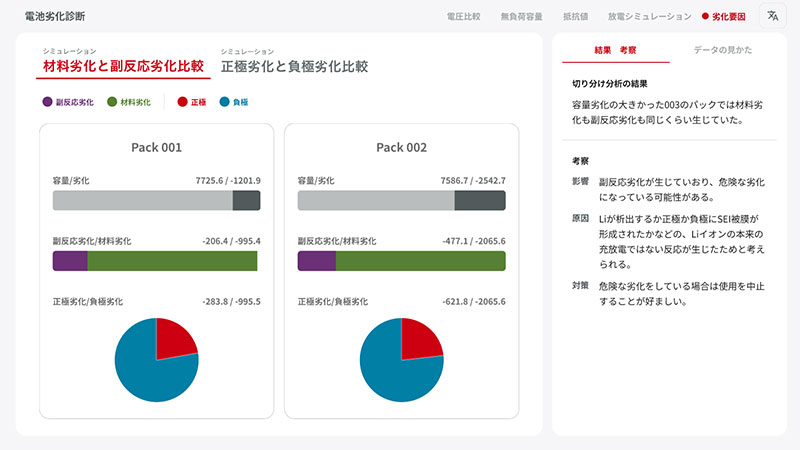
and degradation status.
*This image illustrates the utilization of this service by customers.
We do not provide an application to turn the analysis results into graphs.
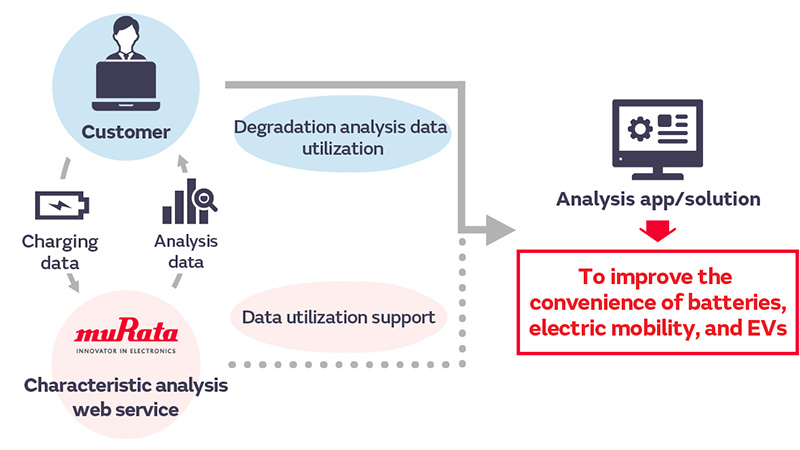
and solutions without creating a battery degradation analysis algorithm
Features of the lithium-ion battery analysis web service
-
Feature
Contributes to the development of highly reliable products through highly accurate battery analysis data and degradation safety assessments
Murata combines our unique knowledge with the charging curve analysis method that analyzes voltage changes (charging curve) in batteries during charging. This enables to obtain various information with high accuracy regarding the internal status of batteries and the degradation mechanisms, including reductions in the positive and negative electrode capacities, charging imbalances between the positive and negative electrodes.
Moreover, based on the above analysis results, we are currently developing a function to enable the evaluation of the safety of the battery degradation status. Realizing this will lead to the elimination of unsafe batteries. Therefore, we expect this service to contribute to the design and provision of highly reliable products and services.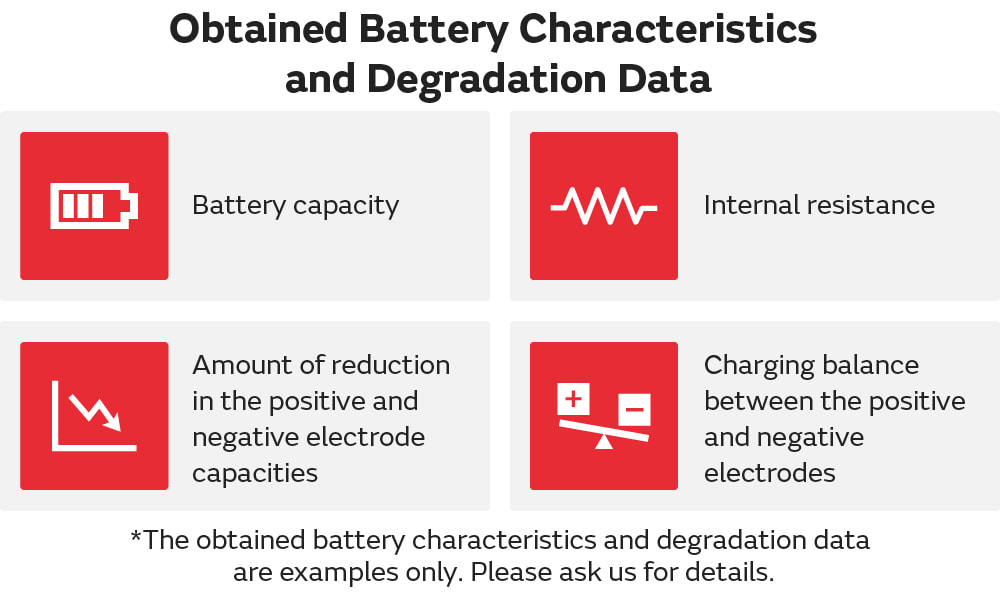
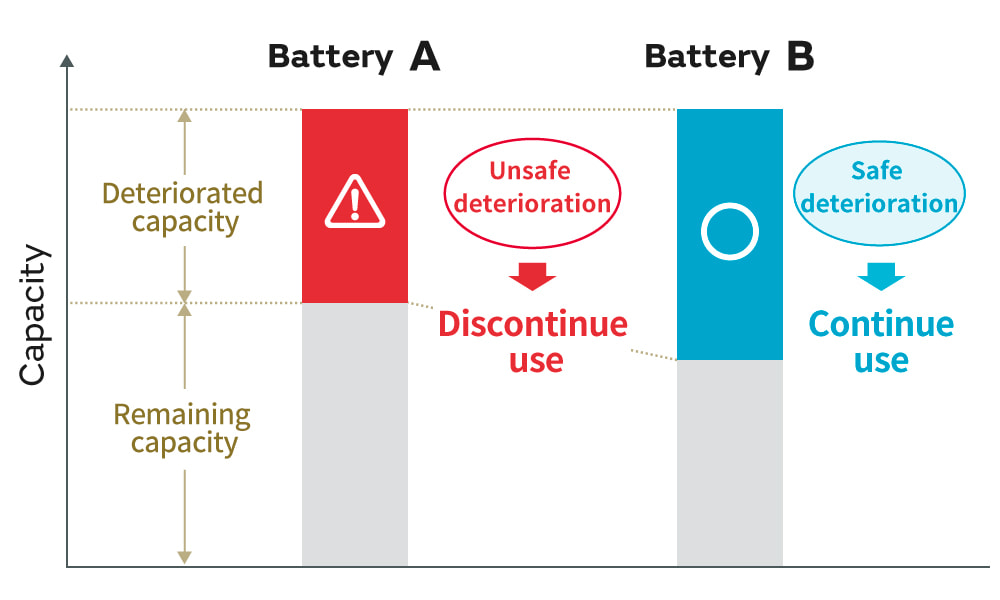
We are developing a function to be able to grasp the safety of batteries by judging safe degradation and unsafe degradation.
Furthermore, we can also provide battery discharging simulations (discharging curve estimations for each discharging rate) based on the analysis results.
You can utilize this data in ways such as estimating the driving range and operating time of EVs and other vehicles.Please flick to see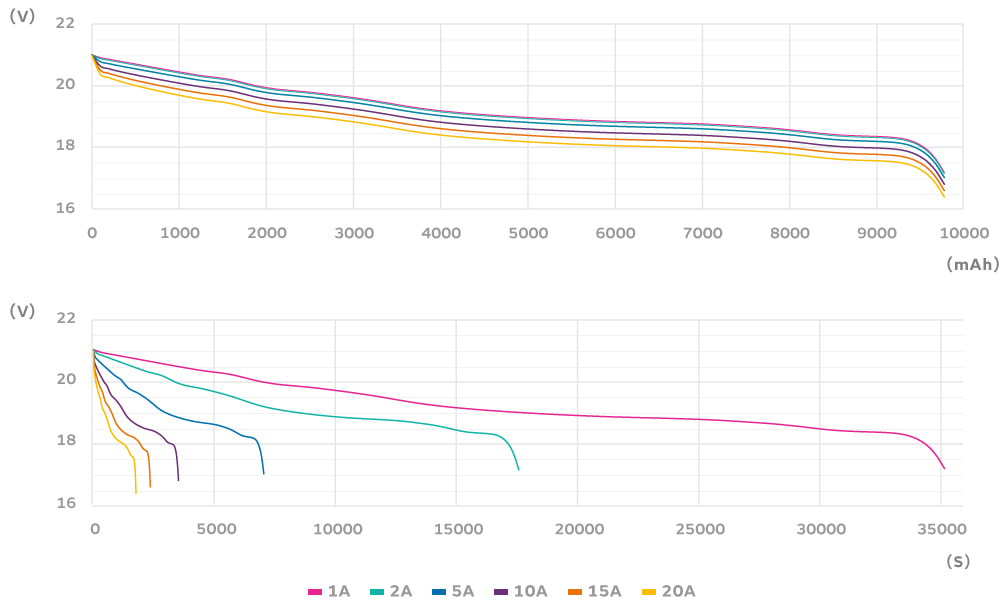
It is also possible to conduct battery discharging simulations (discharging curve estimations for each discharging rate) by analyzing the charging data. -
Feature
Possible to introduce at low cost
When you send battery charging data to the server managed by Murata, we will analyze the charging data and send the results back to you.
You can obtain analysis results just by preparing and sending us your charging data. Therefore, you do not need to introduce specialized facilities, such as large measuring equipment, or devices for analysis. This enables low-cost and rapid introduction, measurement, and analysis. -
Feature
Providing API and various forms of support to promote app and solution development
You can receive analysis data via an API and utilize that data in various applications and solutions.
In addition, we can provide battery analysis demos and analysis reports, and offer support in interpreting and utilizing the obtained analysis results, as needed during development.
*We do not provide an application to turn the analysis results into graphs. -
Feature
Compatible with various types of lithium-ion secondary batteries
In order to conduct battery curve analysis, it is necessary to have information on how the positive and negative electrodes chemically react depending on the material.
Murata possesses data and knowledge on various battery materials. Utilizing that data and knowledge enables us to analyze the majority of types of lithium-ion batteries with positive and negative electrodes that are commercialized.Main types of batteries that we can analyze
*Please ask us about whether we can analyze other batteries.Electrode Typical Battery Types Positive electrode NCA, NCM, LFP, etc. Negative electrode Graphite, SiO composite, etc.
Lithium-ion Battery Analysis Web Service Usage Examples
You can utilize the analysis data obtained in this web service to develop applications and solutions like the following examples.
This can improve the convenience of batteries, electric mobility, and EVs.
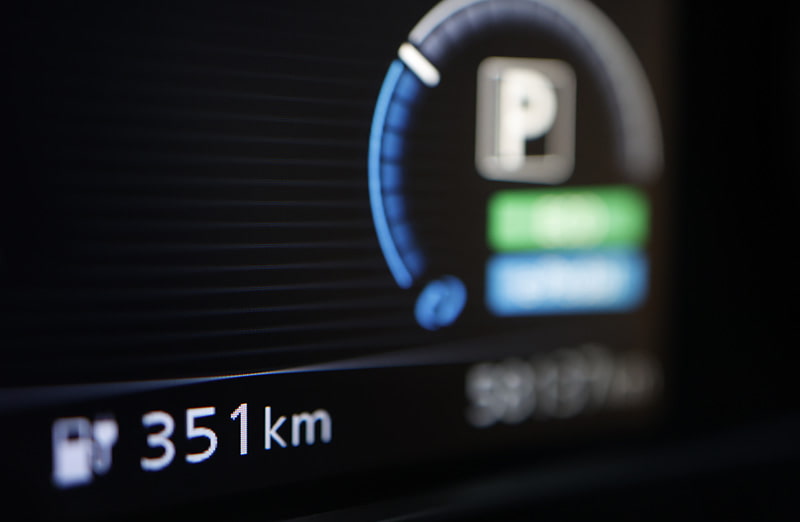
Driving Range Prediction
We expect this web service will be utilized to develop EV and electric mobility applications to reduce unexpected battery depletion by estimating the drivable range and operating time taking into consideration the battery degradation status.
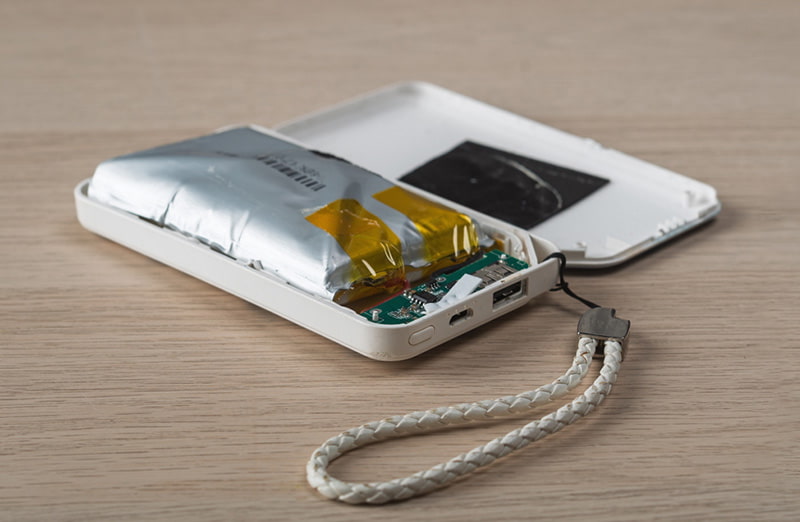
Battery Safety and Risk Assessment
We expect this web service will be utilized in services such as visualizing the risks that accompany battery degradation, assessing the safety of degraded batteries, and calculating insurance premiums taking into consideration battery risks.
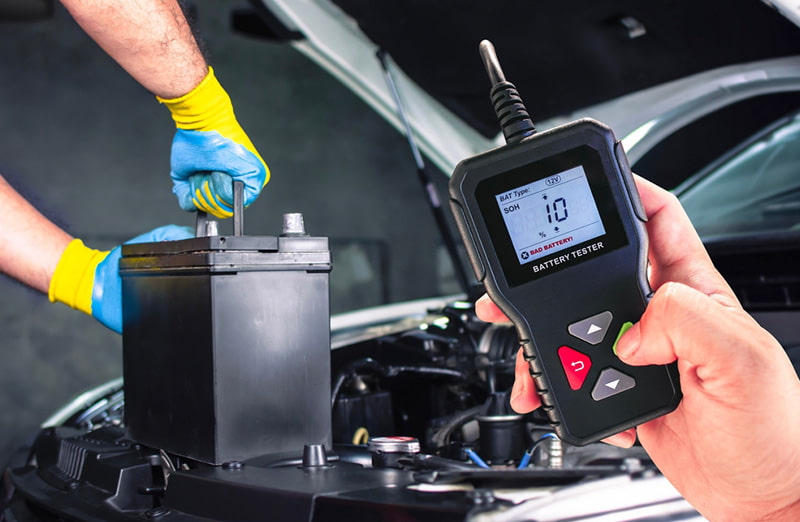
Evaluation of the Remaining Life and Value of Batteries
This web service enables to accurate analysis of battery status. Therefore, we expect it will be utilized to develop services to evaluate the remaining life of batteries and calculate the value of used EVs and storage batteries.
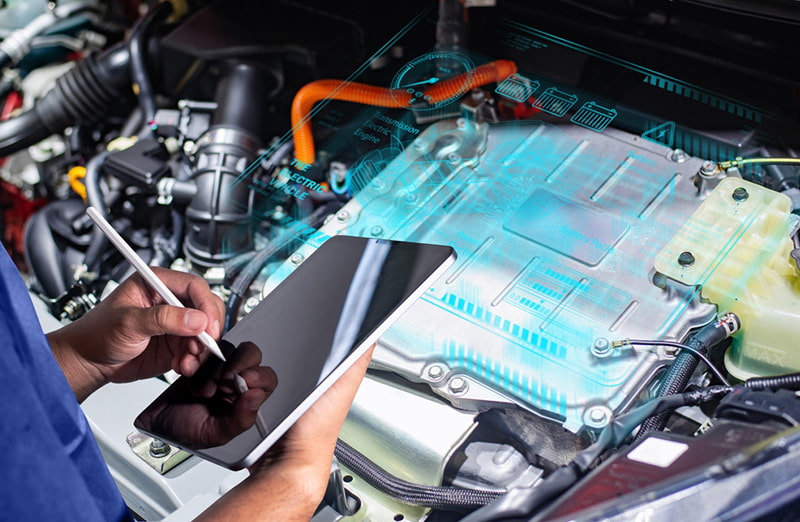
Battery Passport
We expect that users and third parties will find it easier to grasp the history of batteries by using the acquired analysis data as a data source such as a battery passport.
FAQ
The data is acquired at the same time as the battery is charged. The analysis is then completed in a few seconds after the battery charging is complete.
Specialized battery knowledge is not required. Please feel free to contact us about the methods of introducing this service and utilizing the analysis results.
The main benefits of the charging curve analysis technique are considered to be the following:
- If you have chargers, charging/discharging devices, or other equipment, it is possible to obtain the data necessary for analysis. Therefore, there is no need to newly introduce expensive diagnostic equipment.
- Various types of information can be obtained in relation to the battery degradation mechanism. This makes it easier to manage batteries based on the degradation mechanism.
- This evaluation technique is based on the principles of batteries (chemical reaction of the positive and negative electrodes). Therefore, there is no need to build an inference model that uses large amounts of historical data. Moreover, it is possible to easily ensure the robustness of the analysis.
It is possible to determine whether the degradation is safe or unsafe. This is helpful in reducing fire risks, evaluating the potential for reuse, and planning safety measures.
It is possible to analyze almost all the types of lithium-ion secondary batteries on the market. You can utilize these diagnoses in a wide range of applications including electric vehicle batteries, electric two-wheeled vehicle batteries, and storage system batteries.
There is no need for special equipment. You can utilize your existing batteries, hardware, databases, and systems. Please feel free to contact us about the method of introducing this service.
Message from the developers

-
Murata Manufacturing Co., Ltd.
Asuki Yanagihara
New Business Development Dept 2. Environment Business Development sectionCaution is necessary when managing and handling batteries. Advanced knowledge and experience are required. If you use the battery analysis technology we provide, you will be able to accurately and easily grasp the true state of batteries. This will make it possible to handle batteries with peace of mind. We believe that batteries should be used safely for a long time. It would make us at Murata Manufacturing happy to be able to help to create a better society through our technology.
News
-
We have updated our Lithium-ion battery analysis web service development theme for which we are looking for collaboration partners.
-
We have posted a technical article titled “Reuse, Repurpose, and Recycling of Lithium-Ion Batteries (LiBs), and the Need for Battery Characterization and Degradation Diagnosis.”
-
We have posted a technical article titled “Providing Components and Solutions for the Automobile Society of the Future: Murata Manufacturing at the Automotive Engineering Exposition 2025.”
-
We have posted the lithium-ion battery analysis web service development theme for which we are looking for collaboration partners.
Read More

Inquiries
Please feel free to contact us if your company is interested in collaborating with us to utilize clean energy and solve social issues.
*This product is under development. Therefore, the specifications are subject to change without prior notice.